Basement & Ground-Level Flood Cleanup in Fort Pierce, FL
Professional basement flood cleanup with 24/7 emergency response
Low-lying and below-grade spaces flood fast during Treasure Coast storms and plumbing failures. Ontime Fort Pierce Water Damage provides emergency basement and ground-level flood cleanup with high-volume pumping, sanitizing, and complete structural drying.
High-Volume Water Removal
Standing water in a below-grade or slab-level space must be removed before drying can begin. We deploy submersible pumps and truck-mounted extractors capable of removing thousands of gallons per hour, then squeegee and extract the residual moisture from flooring and slab surfaces.
Contamination and Sanitizing
Flood water that enters from outside is treated as contaminated. We remove affected porous materials, apply EPA-registered antimicrobials to walls, slabs, and framing, and use containment to keep contaminants out of the rest of the home.
Preventing the Next Flood
After restoration we review grading, sump pump condition, drain performance, and moisture barriers, giving you a practical list of steps to reduce the chance of a repeat event during the next storm season.
Service Areas
We provide basement flood cleanup throughout the Treasure Coast including: Fort Pierce, Port St. Lucie, Stuart, Vero Beach, Jensen Beach, Palm City, Sebastian, Okeechobee, Hobe Sound, Tradition.
Get Free Estimate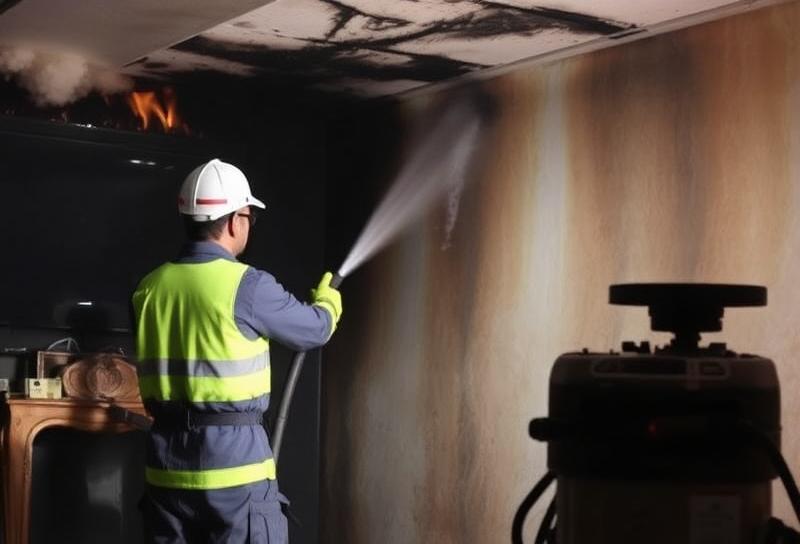
Common Causes of Below-Grade and Ground-Level Flooding
True basements are rare in Fort Pierce, but below-grade and ground-level spaces flood constantly, and they behave the same way.
Heavy Rainfall Events
Several inches in a few hours overwhelm swales, retention areas and drainage, and water finds the lowest opening in the building.
Groundwater and High Water Table
The Treasure Coast water table sits close to the surface. After sustained rain it rises above slab level and pushes moisture through concrete and joints.
Sump Pump Failure
Pumps fail from age, clogged intakes or the power outage that accompanies the very storm they are needed for.
Grading and Drainage Problems
Landscaping that slopes toward the house, blocked gutters and downspouts discharging at the foundation deliver water straight to the wall.
Foundation and Wall Seepage
Cracks, cold joints and porous block allow water to weep in slowly for days after the rain has stopped.
Drain and Sewer Backups
Floor drains in below-grade spaces are the first place a surcharged sewer line comes back up.
Warning Signs You Should Not Ignore
Below-grade spaces trap humidity and hide problems. Watch for these indicators even when there is no visible standing water:
- Efflorescence, a white chalky residue, on concrete or block walls
- Damp, dark staining along the base of walls
- A persistently musty odor that never fully clears
- Rust forming on appliance feet, shelving legs and metal storage
- Peeling paint or bubbling sealer on concrete surfaces
- Cardboard boxes softening or wicking at the bottom
- Visible mold on stored items, especially fabric and paper
- Relative humidity readings consistently above 60 percent
A below-grade space that stays humid does not need a flood to grow mold. Continuous moisture and stagnant air are enough on their own.
📞 Call Now🚨 When It Becomes an Emergency
Do not enter standing water in a below-grade space until power to that area is confirmed off. Water plus outlets, extension cords and appliance circuits in a confined space is the most dangerous scenario we respond to.
Do not use a gas-powered pump or generator in an enclosed lower level. Carbon monoxide accumulates fast in these spaces. Photograph the water level before pumping, then call for a crew with the right pumping capacity and safety equipment.
Our Basement Flood Cleanup Process
Below-grade work is pumping, contamination control, then dehumidification held long enough to matter.
Safety and Power Isolation
Electrical hazards are addressed first, the water source and category are determined, and the water level is documented for your claim.
Pumping and Extraction
Submersible and trash pumps remove bulk water, then extractors clear residual water from concrete, carpet and stored contents.
Cleaning and Material Removal
Contaminated or saturated porous materials are removed, surfaces are cleaned and treated, and the space is HEPA filtered throughout.
Aggressive Dehumidification
Concrete and block release moisture slowly, so dehumidification runs longer here than in above-grade spaces and is monitored daily.
Equipment and Technology We Use
Volume and humidity control are the two challenges in every below-grade job.
Submersible and Trash Pumps
High-volume removal of deep and debris-laden water from stairwells, garages, elevator pits and lower levels.
Truck-Mounted Extraction
Clears residual water from concrete, carpet and pad once bulk water is gone.
LGR and Desiccant Dehumidifiers
Essential below grade, where cool surfaces and poor airflow make natural drying effectively impossible.
HEPA Air Scrubbers
Control airborne mold spores and contaminants in a confined space with limited natural ventilation.
Generators and Lighting
Below-grade flooding usually accompanies a power outage, so we bring our own power and safe lighting.
Antimicrobial Treatment
Applied to concrete, block and framing, which are exactly the surfaces mold colonizes in a chronically damp space.
Residential and Commercial Applications
The same certified crews and documentation, scaled to the property.
🏠 Residential Properties
In Fort Pierce this usually means garages, sunken living areas, ground-level storage rooms, workshops and enclosed lanais rather than true basements.
- Garage and workshop flooding after heavy rain
- Sunken living areas and ground-level storage rooms
- Stored contents triage, cleaning and disposal documentation
- Appliance, water heater and HVAC assessment after submersion
- Drainage and prevention recommendations before the next storm
🏢 Commercial Properties
Commercial lower levels hold the things a business can least afford to lose: records, inventory, mechanical systems and electrical gear.
- Parking structures, elevator pits and mechanical rooms
- Records storage and document recovery
- Warehouse and stockroom inventory triage
- Restaurant walk-in and back-of-house areas
- Ongoing dehumidification while operations continue
Why Early Restoration Costs Less
Timelines matter more in Florida humidity than almost anywhere else in the country.
✅ Pumped and Dried Immediately
Water leaves before concrete and block absorb significant moisture. Stored contents are usually salvageable, and the space is dry and clear in three to five days.
⚠ Left to Drain on Its Own
Concrete and block soak up water and hold it for weeks, mold spreads across walls and stored items, odor permeates the entire building, and the space needs remediation rather than drying.
Prevention pays here. Extend downspouts away from the foundation, keep swales clear, regrade landscaping that slopes toward the house, and test any sump pump before hurricane season, including on battery backup.
Insurance Considerations
This is where many Florida property owners get an unwelcome surprise. Groundwater seepage and rising surface water are excluded from standard homeowner policies and require separate flood coverage. Sump pump failure and water backup are usually a separate endorsement as well.
A sudden plumbing failure that flooded the space, however, is generally covered. Because the distinction determines whether a claim is paid, we document the entry path, the water line and the source condition carefully before cleanup begins, and we provide the photographs and readings that support whichever policy applies.
📄 What We Document on Every Job
- Photographs of the source, the affected materials and the surrounding rooms before work begins
- Room-by-room moisture maps and daily meter readings until dry standard is verified
- Equipment logs showing what ran, where it ran and for how long
- Line-item estimates in the format adjusters already work with
- A written cause-of-loss summary separating sudden events from long-term seepage
Basement Flood Cleanup Across Fort Pierce and the Treasure Coast
The Treasure Coast water table is high, which is precisely why traditional basements were never common here. What we do have are below-grade garages, sunken rooms, ground-level storage and mechanical spaces that behave exactly like basements during heavy rain, including the humidity problem that follows.
Neighborhoods along canals in Port St. Lucie and Palm City, low-lying areas of Fort Pierce near the lagoon, and older Stuart properties with original drainage see this most often. Inland around Okeechobee, saturated ground after prolonged rain pushes water up rather than in.
Related: flood damage repair, sewage cleanup, mold remediation, and preventing water damage during storm season.
Basement Flood Cleanup FAQs
Immediately. After 24 to 48 hours of standing water, mold growth begins and porous materials become unsalvageable.
Storm surge and rising water usually require separate flood insurance. Interior plumbing failures are typically covered by a standard policy. We document the source carefully for either claim.
Yes. We inventory, pack out, clean, and dry salvageable contents, and document non-salvageable items for your claim.
Most ground-level flood losses require five to seven days of drying. Concrete slabs and masonry walls can take longer.
Yes. We verify dryness with meters and inspect for mold growth before any reconstruction begins.
Very few, because the water table is high. But we regularly flood-clean below-grade garages, sunken rooms, ground-level storage and mechanical spaces, which present the same pumping, contamination and humidity challenges.
Longer than most people expect. Concrete and block store moisture and release it slowly, so plan on five to ten days of dehumidification, sometimes more after prolonged flooding.
No. Fans move humid air around a cool, enclosed space without removing moisture, which usually accelerates mold rather than preventing it. Dehumidification is what actually dries a below-grade space.
Start with drainage: extend downspouts, clear swales, regrade soil sloping toward the structure, and seal foundation cracks. Add a sump pump with battery backup if the space floods repeatedly, and test it before each hurricane season.
Need Emergency Water Damage Help?
Our certified technicians are available 24/7. Fast response times throughout the Treasure Coast.
📞 Call Now Get Free Estimate