Structural Drying Services in Fort Pierce, FL
Professional structural drying services with 24/7 emergency response
Proper structural drying is the most critical phase of water damage restoration. Incomplete drying leads to mold growth, structural deterioration, and ongoing damage. Ontime Fort Pierce Water Damage uses advanced psychrometric science and commercial-grade drying equipment to achieve complete structural drying in Fort Pierce homes and businesses, verified through daily moisture monitoring.
The Science of Structural Drying
Structural drying is far more than placing fans in a wet room. Our technicians apply psychrometric principles — the science of moisture in air — to create optimal drying conditions. We calculate specific humidity ratios, monitor grain depression, and adjust equipment placement daily to maximize evaporation rates while minimizing energy consumption and drying time.
Advanced Drying Equipment
We deploy a comprehensive array of commercial drying equipment: LGR (Low Grain Refrigerant) dehumidifiers that extract up to 30 gallons of water per day, high-velocity air movers that create targeted airflow patterns, desiccant dehumidifiers for challenging drying conditions, and specialty equipment like injectidry systems for wall cavities and hardwood floor drying mats.
Moisture Monitoring and Documentation
Every structural drying project includes daily moisture monitoring using pin moisture meters, pinless meters, and thermo-hygrometers. We create detailed moisture maps, track drying progress with daily readings, and document everything for your insurance claim. Drying is not complete until all materials reach their normal equilibrium moisture content — we never estimate or guess.
Service Areas
We provide structural drying services throughout the Treasure Coast including: Fort Pierce, Port St. Lucie, Stuart, Vero Beach, Jensen Beach, Palm City, Sebastian, Okeechobee, Hobe Sound, Tradition.
Get Free Estimate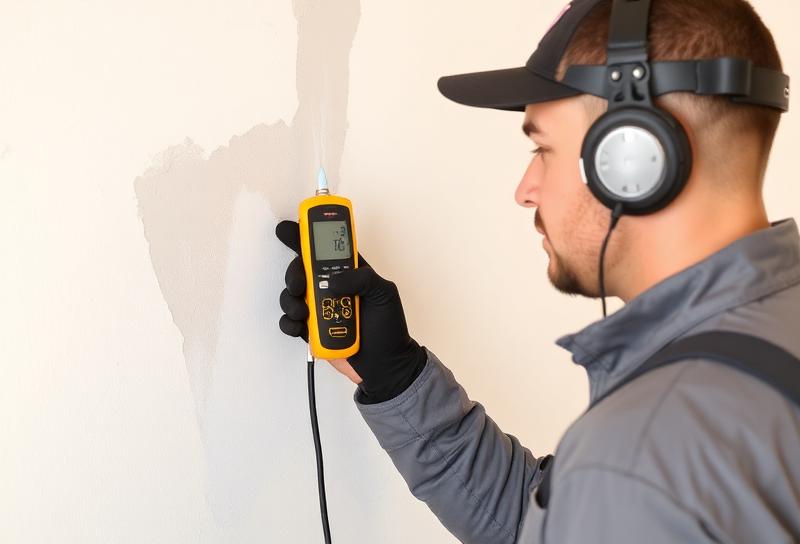
Common Causes of Situations That Require Professional Drying
Surface water is easy to see. The moisture inside the structure is what determines whether a property recovers.
Post-Extraction Saturation
Even after every visible gallon is removed, framing, subfloor and drywall hold enormous amounts of bound water that only controlled drying can release.
Wet Wall Cavities
Water wicks upward inside walls through drywall paper and insulation, leaving cavities wet long after the surface feels dry.
Hardwood and Engineered Floors
Wood absorbs moisture unevenly and cups or crowns. Specialized mat systems can pull that moisture out before the boards are lost.
Concrete Slabs and Block Walls
Fort Pierce construction is largely block and slab, and both hold moisture for weeks and release it slowly into the interior air.
Insulation and Ceiling Cavities
Wet insulation loses R-value permanently and holds moisture directly against framing and drywall.
Large Commercial Volumes
Warehouses, sanctuaries and open retail spaces need engineered airflow and dehumidification capacity, not a few rented fans.
Warning Signs You Should Not Ignore
Property owners often assume drying is done because floors feel dry underfoot. These signs mean moisture is still present in the structure:
- Baseboards or drywall that still read wet on a meter
- Musty odor developing three to five days after the loss
- Condensation returning on windows or vents
- Flooring that feels cool, or tile that sounds hollow when tapped
- Paint or joint compound that will not cure properly
- Wood flooring that has begun cupping at the seams
- Elevated relative humidity in a closed room
- Damp or compressed insulation in the affected wall
Closing walls, laying flooring or painting over a structure that has not reached dry standard is the most expensive mistake in restoration, because everything installed has to come back out.
📞 Call Now🚨 When It Becomes an Emergency
Structural drying is a race against Florida humidity. If drying has not started within 24 hours of a water loss, you are already in mold-risk territory.
Household fans move air but add no dehumidification, and opening windows in a coastal climate usually pushes more moisture into the building than it removes. If you have already run fans for a day or two without professional dehumidification, call for a moisture assessment before assuming the job is done.
Our Structural Drying Process
Drying is engineered, not improvised. Every placement is based on measurement.
Moisture Mapping and Calculation
We measure affected materials, air temperature and relative humidity, then calculate how much dehumidification and airflow the space actually requires.
Equipment Placement
Dehumidifiers and air movers are positioned to create directed evaporation across wet surfaces and into the dehumidifier intake, not random air turbulence.
Daily Monitoring
Readings are taken every day in the same locations. Equipment is added, removed or repositioned based on how the structure is actually responding.
Verification and Documentation
Drying ends when affected materials match unaffected baselines. You receive the complete log showing how the structure reached that point.
Equipment and Technology We Use
Capacity and placement matter more than machine count.
LGR Dehumidifiers
Low-grain refrigerant units continue removing moisture at low humidity levels where conventional dehumidifiers stall out.
Desiccant Dehumidifiers
Use chemical adsorption to reach very low humidity, essential for hardwood, dense materials and large commercial volumes.
Axial and Centrifugal Air Movers
Create the high-velocity boundary-layer airflow that lifts moisture out of surfaces and into the air for removal.
Injectidry Cavity Systems
Force dry air directly into wall cavities, under hardwood and above ceilings, saving materials that would otherwise be demolished.
Heat Drying Systems
Raise material temperature to accelerate evaporation on stubborn assemblies and cold-season commercial losses.
Thermo-Hygrometers and Data Logging
Track grains per pound, temperature and material moisture content so progress is measured, not assumed.
Residential and Commercial Applications
The same certified crews and documentation, scaled to the property.
🏠 Residential Properties
In a home, good drying is measured by how little demolition it requires. Cavity drying systems routinely save drywall, cabinetry and hardwood that other companies would remove.
- In-place hardwood floor drying with mat systems
- Wall cavity drying through small, patchable access points
- Ceiling and attic drying after roof or AC leaks
- Cabinet and vanity drying without full removal
- Daily readings shared with the homeowner and the adjuster
🏢 Commercial Properties
Commercial drying is a capacity problem. Getting the calculation right is the difference between four days closed and two weeks closed.
- Desiccant units for warehouses, sanctuaries and open retail floors
- Temporary power and phased containment to keep parts of the business open
- Documented drying logs for business interruption claims
- Overnight equipment monitoring on large losses
- Coordination with property managers and tenant schedules
Why Early Restoration Costs Less
Timelines matter more in Florida humidity than almost anywhere else in the country.
✅ Proper Drying, Days 1 to 5
Materials release moisture steadily, mold never establishes, and most finishes stay in place. The property closes out with minimal reconstruction and full documentation that satisfies the carrier.
⚠ Fans Only, or Drying Stopped Early
The surface dries while cavities stay wet. Two to three weeks later, odor appears, paint blisters, flooring cups and mold is discovered behind the drywall, and everything installed in between must be removed.
This is why we log readings daily and leave equipment until the numbers say we are finished. Pulling equipment on schedule instead of on data is how properties fail after the crew leaves.
Insurance Considerations
Adjusters expect drying documentation, and its absence is a common reason invoices get reduced. Daily moisture logs justify how long equipment stayed, and equipment logs justify the count and type deployed.
Because we work in the same estimating platform carriers use, our drying line items map directly to their scope. When a carrier questions equipment duration, the log answers it. When secondary damage appears later, the same log demonstrates that the structure reached verified dry standard.
📄 What We Document on Every Job
- Photographs of the source, the affected materials and the surrounding rooms before work begins
- Room-by-room moisture maps and daily meter readings until dry standard is verified
- Equipment logs showing what ran, where it ran and for how long
- Line-item estimates in the format adjusters already work with
- A written cause-of-loss summary separating sudden events from long-term seepage
Structural Drying Across Fort Pierce and the Treasure Coast
Drying in Fort Pierce is genuinely harder than drying the same house in a drier climate. Outdoor dew points here sit in the low to mid 70s for much of the year, so bringing outside air in through open windows adds moisture instead of removing it. Every drying chamber we build is closed and dehumidified rather than ventilated.
Local construction adds to it. Block walls and concrete slabs store large amounts of moisture and release it slowly, which is why a Fort Pierce drying job sometimes needs a day or two longer than the same loss in a wood-framed home elsewhere. We plan for that instead of pulling equipment early.
We provide structural drying throughout Fort Pierce, Port St. Lucie, Stuart, Vero Beach, Palm City, Sebastian and the surrounding Treasure Coast. Related: water damage restoration, mold remediation, and how long structural drying takes.
Structural Drying FAQs
Residential structural drying typically takes 3-5 days. However, heavily saturated structures, concrete slabs, and hardwood floors may require 7-10 days for complete drying.
Household fans are insufficient for structural drying. Commercial air movers produce 3-4 times the airflow of household fans and are designed to create specific airflow patterns that maximize evaporation. Improper drying can actually worsen moisture migration.
We use precision moisture meters to verify that all materials have reached their dry standard — the equilibrium moisture content for that specific material in your climate. We never rely on touch or visual inspection alone.
Yes, when completed properly and promptly. Mold requires sustained moisture to grow. By achieving complete structural drying within the critical 24-48 hour window, we eliminate the conditions that mold needs to colonize.
Yes. We carefully move and protect furniture to ensure proper airflow throughout the affected area. We place protective blocks under furniture legs and use specialized equipment to dry under cabinets and built-in fixtures.
Most residential projects dry in three to five days. Hardwood, plaster, block walls and multi-layer flooring assemblies can take seven to ten. We monitor daily and remove equipment as soon as readings confirm dry standard rather than on a fixed schedule.
Air movers are noticeably loud, similar to a window fan on high. Please do not turn them off. Drying is cumulative, and every hour of downtime extends the project and increases mold risk.
A typical residential setup adds roughly $10 to $25 per day in electricity. Most insurance carriers reimburse documented power usage as part of the mitigation claim, and we can provide the equipment log to support it.
Frequently, yes. Cavity drying systems push dry air behind the drywall through small, patchable holes. It works best when we are called early, before insulation and framing have been saturated for days.
Need Emergency Water Damage Help?
Our certified technicians are available 24/7. Fast response times throughout the Treasure Coast.
📞 Call Now Get Free Estimate