Water Damage Restoration in Fort Pierce, FL
Professional water damage restoration services with 24/7 emergency response
When water damage strikes your Fort Pierce property, every minute counts. Ontime Fort Pierce Water Damage provides comprehensive water damage restoration services with 60-minute response times, 24 hours a day, 7 days a week. Our IICRC-certified technicians use advanced extraction equipment, industrial dehumidifiers, and moisture detection technology to restore your property quickly and completely.
Our Water Damage Restoration Process
Our proven restoration process begins with an immediate emergency response. Upon arrival, our technicians conduct a thorough assessment using infrared cameras and moisture meters to map the full extent of water intrusion. We then begin rapid water extraction using truck-mounted and portable extractors capable of removing thousands of gallons per hour. Following extraction, we deploy industrial dehumidifiers and air movers to achieve complete structural drying, monitored daily with precision moisture readings. Finally, we handle all necessary repairs and reconstruction to restore your property to its pre-loss condition.
Types of Water Damage We Handle
We're equipped to handle all categories of water damage: Category 1 (clean water) from broken supply lines and faucets, Category 2 (gray water) from washing machines, dishwashers, and sump pump failures, and Category 3 (black water) from sewage backups, flooding, and toilet overflows. Each category requires specific safety protocols and decontamination procedures that our certified team follows precisely.
Why Immediate Response Matters
Water damage progresses rapidly. Within the first 24 hours, drywall begins to swell, metal surfaces start to tarnish, and furniture begins to warp. By 48 hours, mold can begin colonizing on damp surfaces. After a week, structural integrity can be compromised. Our rapid response minimizes secondary damage, reduces restoration costs, and protects your family's health.
Service Areas
We provide water damage restoration services throughout the Treasure Coast including: Fort Pierce, Port St. Lucie, Stuart, Vero Beach, Jensen Beach, Palm City, Sebastian, Okeechobee, Hobe Sound, Tradition.
Get Free Estimate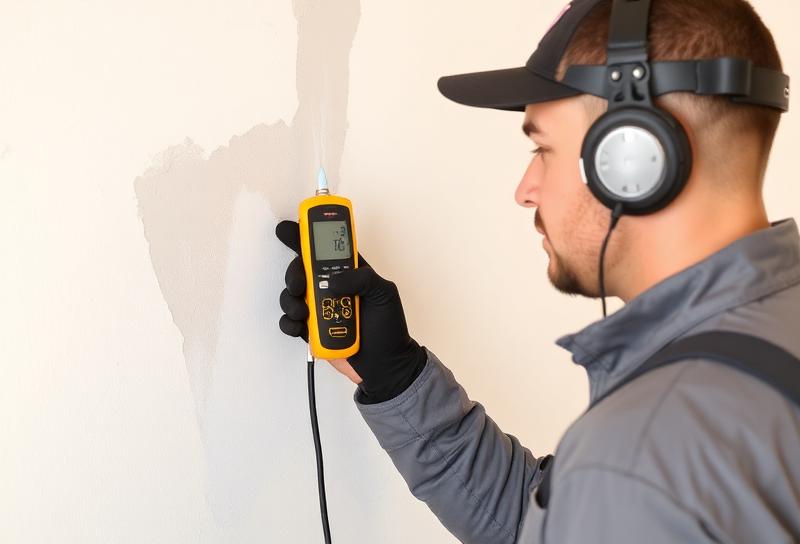
Common Causes of Water Damage in Fort Pierce Homes
Nine out of ten losses we respond to on the Treasure Coast trace back to one of these six failures.
Supply Line Failures
Braided washing machine hoses, icemaker lines and toilet supply connectors fail without warning and can release several hundred gallons an hour into a slab home.
AC Condensate Overflows
A clogged condensate drain backs up into the air handler pan and drips through ceilings and hallway drywall, often for weeks before a stain appears.
Water Heater Ruptures
Tanks in Florida garages typically fail between years eight and twelve, flooding adjoining rooms and wicking up drywall and baseboards within hours.
Roof and Window Intrusion
Wind-driven rain enters at roof edges, soffits and window flanges, then travels along framing and shows up in a room far from the entry point.
Aging Cast-Iron Drains
Older neighborhoods near the historic district still have cast-iron laterals that corrode through and leak beneath slabs and behind cabinetry.
Appliance and Fixture Leaks
Dishwashers, refrigerators and shower pans leak slowly under cabinets and tile, saturating subfloor and insulation before anyone notices.
Warning Signs You Should Not Ignore
Water rarely announces itself in a Florida home. Because most local construction is slab-on-grade with tile over concrete, water spreads sideways and hides under finishes. Look for these indicators:
- Baseboards that feel soft, look swollen or have separated from the wall
- Tile or laminate that sounds hollow, lifts at edges or shifts underfoot
- A persistent musty odor that returns after cleaning
- Water stains, rings or bubbling paint on ceilings and upper walls
- An unexplained jump in your monthly water bill
- Carpet that feels cool or damp along one wall
- Condensation inside windows or on interior AC vents
- Warm or damp spots on a tile floor, which often indicate a slab leak
If two or more of these are present, moisture is almost certainly still active inside the structure. A thermal imaging inspection takes under an hour and costs far less than the mold remediation that follows a missed leak.
📞 Call Now🚨 When It Becomes an Emergency
Call immediately, at any hour, if you have standing water of any depth, water contacting outlets or the electrical panel, a ceiling that is sagging or dripping, water from a toilet or drain line, or water that has been sitting for more than 24 hours.
While you wait, shut off the main water valve, cut power to affected rooms at the breaker if you can reach it safely, lift furniture legs onto foil or blocks, and photograph everything before you move it. Do not run a household vacuum on standing water.
Our Water Damage Restoration Process
Every project follows the same documented sequence, whether it is one wet closet or eight thousand square feet of saturated commercial flooring.
Emergency Assessment
We stop the source, then map every wet cavity with thermal imaging and penetrating meters so the drying plan covers materials you cannot see.
Water Extraction
Truck-mounted and portable extractors remove standing water and pull trapped moisture from carpet, pad, tile grout and hard surfaces.
Structural Drying
Dehumidifiers and air movers are sized by calculation and repositioned daily. Wall cavities and hardwood are dried in place where possible to save materials.
Repairs and Verification
Antimicrobial treatment, then drywall, flooring, trim and paint restored to pre-loss condition, closed out with a full moisture log.
Equipment and Technology We Use
Open windows and box fans do not dry a structure in 75 percent humidity. These do.
Truck-Mounted Extractors
Hundreds of gallons per hour removed from carpet, pad and hard surfaces before drying equipment is ever placed.
LGR Dehumidifiers
Low-grain refrigerant units keep pulling moisture out of the air long after standard dehumidifiers stall in coastal humidity.
Desiccant Systems
Chemical drying for dense materials, hardwood floors and large commercial losses where refrigerant units cannot reach target humidity.
High-Velocity Air Movers
Positioned to create a specific evaporation pattern across wet surfaces, not simply pointed at the puddle.
Thermal Imaging Cameras
Reveal cold, wet wall cavities and ceiling voids so we open only what actually needs to be opened.
Moisture Meters and Data Logging
Penetrating and non-invasive readings recorded daily and compared against unaffected areas to prove dry standard.
Residential and Commercial Applications
The same certified crews and documentation, scaled to the property.
🏠 Residential Properties
Fort Pierce homes are overwhelmingly slab-on-grade with tile, and that changes how water behaves. It spreads under the finish layer, wicks up drywall through the paper facing, and saturates cabinet kick plates that nobody thinks to check.
- Kitchen and laundry losses from supply lines and appliance failures
- Bathroom overflows, shower pan leaks and toilet supply breaks
- Ceiling damage from AC condensate and upstairs plumbing
- Garage and lanai flooding after tropical storms
- Contents protection, on-site drying and pack-out when needed
🏢 Commercial Properties
For a business, the real loss is closed doors. We stage containment and equipment to keep the largest possible part of your operation running, and we work overnight where that limits disruption.
- Retail and restaurant spaces along US-1 and Okeechobee Road
- Medical and dental suites requiring documented sanitation
- Offices, churches, schools and municipal buildings
- Condo and apartment buildings, with HOA and property manager coordination
- Large-loss structural drying with desiccant capacity
Why Early Restoration Costs Less
Timelines matter more in Florida humidity than almost anywhere else in the country.
✅ Within the First 24 Hours
Materials are usually saveable. Carpet and pad can often be dried in place, hardwood can be rescued with mat systems, drywall frequently stays. Costs stay in mitigation rather than reconstruction, and there is no mold question for your carrier to argue about.
⚠ After 48 to 72 Hours
Mold colonization begins, drywall and insulation must be cut out, cabinets delaminate and subfloor may need replacement. Category 1 clean water degrades to Category 2 or 3, requiring containment. Costs commonly triple, and carriers begin questioning delayed mitigation.
This is not a sales argument, it is the physics of evaporation in a humid climate. The single best thing you can do for your property and your claim is start professional drying the same day the loss happens.
Insurance Considerations
Most Florida homeowner policies cover sudden and accidental water discharge, such as a burst supply line or a failed water heater. They generally exclude long-term seepage, poor maintenance and, without a separate flood policy, rising surface water. The difference between covered and denied often comes down to how the cause of loss was documented on day one.
We photograph and measure before touching anything, bill your carrier directly so you typically pay only your deductible, and meet the adjuster on site to justify each line item. If a claim is underpaid, our moisture logs and equipment records are the evidence that supports a supplement.
📄 What We Document on Every Job
- Photographs of the source, the affected materials and the surrounding rooms before work begins
- Room-by-room moisture maps and daily meter readings until dry standard is verified
- Equipment logs showing what ran, where it ran and for how long
- Line-item estimates in the format adjusters already work with
- A written cause-of-loss summary separating sudden events from long-term seepage
Water Damage Restoration Across Fort Pierce and the Treasure Coast
Local building stock and geography change how we approach a loss.
Historic Fort Pierce and River Park
Older frame and block homes with cast-iron drains, original wood subfloor sections and limited attic ventilation. We dry these slowly and carefully to protect original materials. Fort Pierce service area.
Hutchinson Island and South Beach
Coastal condos and beach homes exposed to storm surge and salt air. Saltwater intrusion corrodes fasteners and HVAC coils, so drying is paired with corrosion mitigation.
Tradition and Newer Subdivisions
Newer construction with engineered flooring and tight envelopes that trap humidity once wet. Tradition and Port St. Lucie crews respond in under an hour.
We also serve Lakewood Park, Indian River Estates, White City, Stuart, Jensen Beach, Vero Beach, Palm City, Sebastian, Hobe Sound and Okeechobee. Related reading: restoration cost guide and common causes of residential water damage.
Water Damage Restoration FAQs
Most residential water damage restoration projects take 3-5 days for the drying phase, with total restoration completed within 1-2 weeks depending on the extent of damage and reconstruction needed.
Most homeowner's insurance policies cover sudden and accidental water damage such as pipe bursts and appliance failures. We work directly with your insurance company and can help you navigate the claims process.
In most cases, you can remain in your home during the restoration process. However, if there's Category 3 water damage or extensive mold growth, temporary relocation may be recommended for safety.
Yes. Mold can begin growing within 24-48 hours of water exposure. That's why rapid water extraction and professional drying are critical. Our process includes antimicrobial treatments to prevent mold growth.
We use commercial-grade water extractors, LGR dehumidifiers, high-velocity air movers, HEPA air scrubbers, infrared cameras, and pin/pinless moisture meters for precise monitoring.
Costs vary based on the extent of damage, water category, and affected materials. Typical residential projects range from $1,500 to $10,000+. We provide free on-site estimates.
We take baseline readings in unaffected areas of the same materials, then measure the wet areas daily. Equipment stays until the affected materials match the baseline, not until a set number of days has passed. You receive the complete log at closeout.
Often, yes, if drying starts quickly. We use floor mat drying systems that pull moisture through the boards from above, which frequently saves flooring that would otherwise be torn out. Boards that have already cupped severely or delaminated usually cannot be rescued.
Usually not. Most residential projects keep the family in place. We will tell you up front if contamination, large-scale demolition or a power shutoff makes staying impractical.
Mitigation is the emergency phase that stops damage from spreading: extraction, drying and antimicrobial treatment. Restoration is the rebuild that follows, including drywall, flooring, paint and cabinetry. We handle both so you deal with one company.
Need Emergency Water Damage Help?
Our certified technicians are available 24/7. Fast response times throughout the Treasure Coast.
📞 Call Now Get Free Estimate